

A Brain-Based Perspective
If you've ever wondered:
"Why doesn't logic make my anxiety go away?"
"Why do I know my fear isn't rational, but it still feels real?"
"Why do I keep getting pulled back into the same thoughts?"
...you're not alone. These are some of the questions researchers have been trying to answer for decades.
Modern psychology and neuroscience have greatly expanded our understanding of how the brain processes fear, uncertainty, and perceived threat. While no single model can fully explain the complexity of the brain, understanding a few key concepts can make anxiety and OCD feel much less confusing and help explain why different treatments work.
To better understand anxiety and OCD, it can be helpful to look at two interacting systems within the brain:
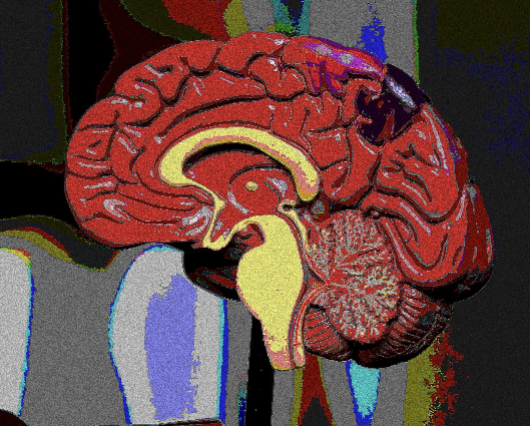
The Amygdala
The brain's "alarm system."
From an evolutionary perspective, the amygdala helps keep us alive. It rapidly detects potential threats and prepares the body to respond, often before we have consciously evaluated whether something is actually dangerous. This quick response increases the chances of survival when facing genuine threats.
The amygdala also plays an important role in fear learning, helping the brain remember experiences associated with danger so we can respond more quickly in the future. Under most circumstances, this is highly adaptive.
Sometimes, however, the brain begins responding to situations, physical sensations, thoughts, or memories as though they signal danger when they do not. These learned fear responses can persist long after the original threat has passed, contributing to avoidance, heightened anxiety, and other protective behaviors that unintentionally keep the fear alive.
Fear learning is thought to play a particularly important role in panic disorder and specific phobias. It also contributes to obsessive-compulsive disorder (OCD), although OCD is also maintained by additional processes, including patterns of reasoning and habit learning.
The Cortex
The brain's "thinking system."
The cortex allows us to reason, plan, solve problems, and imagine future possibilities. These abilities help us learn from experience, anticipate challenges, make thoughtful decisions, and adapt to an ever-changing environment.
The cortex is constantly interpreting information from both the external world and our internal experiences, searching for patterns and attempting to make sense of uncertainty. While this ability is essential for learning and problem-solving, it can also contribute to chronic worry, rumination, overanalysis, and repeated attempts to predict, prevent, or resolve uncertainty.
For some conditions, particularly generalized anxiety disorder (GAD) and obsessive-compulsive disorder (OCD),
these reasoning processes can unintentionally become part of what maintains the disorder. The mind repeatedly searches for answers, certainty, or reassurance in an attempt to reduce distress. Unfortunately, these efforts often provide only temporary relief and reinforce the cycle of anxiety over time.
In OCD, these reasoning processes can sometimes become disconnected from direct sensory information, leading the mind to place greater trust in imagined possibilities than in what is actually observed—a process known as inferential confusion.
Why This Matters
Anxiety can look similar across different conditions, but the underlying processes may be quite different.
For example, panic disorder and specific phobias are strongly influenced by fear learning, generalized anxiety disorder is characterized by persistent worry and attempts to manage uncertainty, and OCD involves both fear learning and reasoning processes that give rise to obsessional doubt and compulsive behaviors.
Because these conditions are maintained differently, they often respond best to different evidence-based interventions. My goal is to understand what is keeping your symptoms going so we can select treatments that target those specific processes.